Wellness Topics
Wellness and Health Promotion Services provides education, promotion and outreach on a variety of topics that impact student success, including:
Physical Health: Our goal is to help students improve their physical health and prevent disease by providing education on best healthcare practices, hygiene, illness prevention, the impacts of physical activity and sleep.
Nutrition: We aim to help students make healthy food choices and engage in mindful eating practices. We offer education on intuitive eating, nutritional food choices, portion control, meal planning, and preparation.
Sexual Health: We believe that individuals should have the right to information and resources to help make informed decisions, without shame or judgement. We offer information on sexual health care, contraception methods, STI prevention and screenings, pregnancy, and the importance of consent.
Alcohol and Other Drugs: It is important for individuals to have access to accurate information to make informed decisions about alcohol and drugs, and help those around them. We provide information on the effects and impacts of the use of alcohol, tobacco, cannabis, prescription, and illicit drugs, as well as harm reduction strategies to reduce the risk of unwanted outcomes for college students.
Stress Management: Our goal is to help students learn skills to help them better deal with stress and difficulties. We offer workshops on stress management and relaxation strategies, sleep hygiene, time management, effective study strategies, balance, and financial planning.
Resiliency and Coping Strategies: Resilience and the ability to cope are key components to student success. We aim to equip students with the strategies to cope with challenges, adversity, and trauma, as well as help them learn and grow from their experiences. Presentations can be provided on adaptability, optimism, self-confidence, personal identity and values, anger management, self-care, and positive social engagement. We also offer workshops on suicide risk factors, warning signs, and effective responses to those in distress.
Violence Prevention: Violence is a serious public health problem that can leave lasting physical and psychological impacts. We hope to lead our campus toward a violence-free future by providing information on safety, bystander violence intervention, sexual assault and consent, dating and domestic violence, stalking, harassment, survivor support, and healthy relationship skills. Our goal is to help survivors, friends, loved ones, and allies find the information and resources they need to help end violence before it happens.
Health Equity: We are dedicated to ensuring that all individuals have equal access to quality care in a safe, supportive, inclusive, and affirmative environment. We also aim to ensure that no one is disadvantaged due to abilities, age, race, ethnicity, gender, sexual orientation, identities, religious beliefs, social position, statuses, backgrounds, and other demographics. We strive to advocate for social justice and become change agents to underserved, marginalized, and at-risk populations and reduce disparities and stigmas.
Wellness Areas
Physical Health
Physical health is an essential component of wellbeing. It impacts our ability to perform daily activities, prevent illness, and reduces the risk of long-term health conditions. Physically well people enjoy a higher quality of life by focusing on the following:
Exercise: Regular engagement in moderately vigorous physical exercise can improve your health and reduce the risk of developing diseases such as diabetes, cancer, and cardiovascular disease. Experts recommend a minimum of 150 minutes of moderate intensity aerobic exercise per week. As a general rule, aim for about 30 minutes per day to condition and strengthen the body. You’ll find that consistent activity increases energy, improves sleep, and elevates your mood.
Sleep: Receiving consistently adequate amounts of quality sleep improves your overall health, mood, and brain performance. Sleep is required by our bodies to support physical and cognitive functioning, support your immune system, and regulate your emotions. Adults are recommended to get at least 7 hours of sleep each night. Not getting enough quality sleep raises the risk of illness and diseases such as obesity, heart disease, and stroke. It also reduces our ability to concentrate and process information, and negatively impacts our mood and relationships.
Illness Prevention: The best way to maintain optimal physical health and prevent illness is to receive regular medical check-ups. Annual screenings and vaccinations reduce risk factors for certain health problems and help individuals make informed health decisions. Because of the dense social environment on campus, college students are more susceptible to illnesses, such as the flu, stomach bugs, and colds. Frequent handwashing helps reduce the spread of germs from common surfaces. It is also recommended to avoiding public places and/or wear a mask when you aren’t feeling well to avoid infecting others. Seeking the general care of medical professionals for injuries and illnesses can get you feeling better faster.
Medication Management: Vitamins, minerals, and medications are important resources for maintaining health, preventing illness, controlling symptoms, and treating health conditions. Consult with your medical provider about what is best for you before starting, changing, or stopping your vitamin and medicine regime. Read medication labels to be sure you are taking the right dose at the right time to receive the maximum benefit. Your chance for better health outcomes improves when you take your vitamins and medications as directed. To avoid skipping doses, organize your medications in pill containers and create a routine to take medicines with activities you do at the same time each day, such as after a meal or brushing your teeth. Reminders on your electronic devices are also helpful. Remember, sharing prescriptions with others, even when you intend to help them, is a dangerous misuse that could cause serious consequences.
Please fill out the request workshop online form to request programming
Resources: Printable Flyers:Nutrition
Nutrition is a critical part of health and wellness. Eating a regular, balanced diet improves your immune system, lowers your risk of diseases, and increases life expectancy. The foods you eat supply the nutrients your body needs to maintain your brain, muscle, bone, nerves, skin, blood circulation, and immune system. People with adequate nutrition have more energy, are more productive, and learn better.
Are you experiencing eating challenges? Learn more about how Student Health Services assesses eating challenges and provides a treatment plan. You can also make an appointment with the Dietitian on staff for nutrition-related questions or eating challenges.
Healthy Food Choices
Experts recommend that women ages 19 to 50 should aim for 1,800 to 2,000 daily calories; men ages 19 to 50 should aim for 2,200. Choose foods that are higher in dietary fiber, vitamin D, calcium, iron, and potassium and lower in saturated fats, sodium, and added sugars. Daily, this should look like:
- 2.5 to 3 cups of vegetables
- 1.5 to 2 cups of fruit
- .5 cups of whole grains
- 5 to 6 ounces of poultry, fish, or meat
- 3 cups of dairy
- 1 to 2 tablespoons of healthy oils
Water
Water is a healthy choice to keep you hydrated, regulate your body temperature, and flush body waste. It also boosts energy, aids in digestion, and prevents certain medical conditions like urinary tract infections, kidney stones, and hypertension. Water is also sugar-free, caffeine-free, alcohol-free, and freely available! Though we take in fluids from the foods we eat, it is recommended that individuals drink 6 to 8 cups of water a day. This amount should increase during warmer temperatures, prolonged physical exercise, and when recovering from illness. Aim to drink enough water that your urine is a clear, pale-yellow color.
Healthy Food Tips
- Choose fresh fruit and raw vegetables over pre-packaged snacks
- Choose reduced-fat dairy items
- Limit sugary snacks and beverages
- Reduce salt and high-sodium foods and condiments
- Limit baked and fried foods
- Trim visible fat from meat
- Steam or boil instead of frying when cooking
- Replacing butter and lard with soybean, canola, and sunflower oil
- Eat vegetables first during meals
Healthy Eating Strategies
- Avoid diet fads that offer false promises of losing weight easily, quickly, and permanently.
- Consider healthy additions to your lifestyle and make small changes over time.
- Work towards creating habits, not restrictions.
- Honor food as fuel for your body’s functions without evaluations of “good” or “bad.”
- Pay attention to biological signals that tell you when you are hungry and when you are satisfied.
- Respect your body and find ways to be kind to your emotions.
Mindful Eating
Mindful eating is engaging your senses to eat consciously. It encourages the practice of attending to your body’s food needs and acknowledging hunger and fullness cues. Mindful eating allows individuals to enjoy meals and nurturing food options. Here are some tips:
- Tune in to your body’s hunger signals rather than emotional prompts to eat. This often includes stomach growling and low energy.
- Choose foods that are nutritionally healthy, not emotionally comforting.
- Attend fully to each bite to avoid distracted overeating.
- Slow your eating to allow your body to send its satiation signal to your brain and stop when your body says its full.
Meal Planning and Preparation
Planning meals ahead of time helps achieve nutritional goals. It helps you make healthier food and portion choices, saves time with meal preparation, and reduces food waste. Plan adequate meals and snacks to sustain your energy through daily activities. Also, consider varying food options that ensure a balanced diet. Remember, to avoid contamination, wash hands and surfaces often, refrigerate necessary foods properly, and cook to proper temperatures.
Eating Healthy on a Budget
Nutritious food can be expensive. Here are some tips to help you eat healthier on a budget:
- Stock up on staple household items in larger quantities.
- Hunt for sales and generic brands.
- Buy in-season produce and freeze extras to use later.
- Don’t pay extra for pre-cut fruits and vegetables.
- Frozen fruits and vegetables are often just as nutritious and more affordable.
- Replace meat with other less expensive proteins like beans, eggs, or fish.
- Shop local: try the local Carbondale Farmers Market on Saturdays or visit the Campus Sustainability Farms sale on Wednesdays in the Student Center.
- Seek support from the Saluki Food Pantry
Please fill out the request workshop online form to request programming.
Nutrition Resources
Nutrition Smartphone Apps Printable FlyersSexual Health
Sexual health involves a respectful approach to safer sexual experiences, free from coercion, assault, and discrimination for all sexual orientations and expressions and gender identities and relationships. It is important for all individuals to have the information and resources to help them make informed decisions, without shame or judgment, should they choose to engage in sexual behavior.
Wellness and Health Promotion Services offers free external condoms, lubrication, and safer sex kits to departments on campus by request. This is thanks to an initiative through the Jackson County Health Department. To request safer sex materials for pickup please complete this form
CONSENT
Consent is an important part in making sexual activities safe, mutual, and enjoyable by ensuring that each individual’s boundaries, feelings, and choices are respected.
Consent is a clear, affirmative, unambiguous and freely given agreement to engage in a specific sexual activity.
- Clear: demonstrated verbally, such as asking “would you like it if I…” or through actions that clearly indicate a willingness to engage in the specific sexual activity, such as nodding yes, reciprocated touching, or pulling someone closer.
- Affirmative: must be voluntarily agreeing, knowing the full implications.
- Ambiguous: never implied or assumed.
- Freely Given: cannot be given when it is coerced, forced, or obtained by use of duress, fear, threats, or violence.
To give consent, a person must be awake, of legal age, and have the capacity to reasonably understand the nature of their actions. Consent cannot be given by an individual who is mentally or physically incapacitated through the effect of drugs, alcohol or other intoxicants or for any other reason. It is automatically withdrawn when a person is no longer capable of giving consent.
Sexual contact or behavior that occurs without consent or after consent is withdrawn is sexual assault. Consent may be withdrawn at any time for any reason. The use of alcohol, drugs, or other intoxicants does not diminish one's responsibility to obtain consent.
Consent is not implied by the existence of a prior or current relationship or participation in prior sexual activity. Additionally, consent for one specific activity does not imply consent for any other activity.
If you have experienced sexual assault, the Confidential Advisor can provide a safe space to explore options and get connected to supportive services.
CONTRACEPTION
Unprotected sexual activity can put individuals at risk of unintended pregnancy and sexually transmitted infections. Contraceptives are methods to prevent pregnancy and reduce infections. A medical provider can help you choose the best contraception option(s) for you by assessing your medical and sexual health needs.
Condom: Condoms are thin, stretchy pouches worn either internally or externally during intercourse. They prevent the exchange of the bodily fluids that spread infections or allow sperm to meet an egg, resulting in pregnancy. Condoms are 87% effective and are low to no cost. They should be used during oral, anal, and vaginal sex.
Wellness and Health Promotion Services offers free condoms in our office. Low-cost condoms, lubricant, and dental dams are available for purchase at the Student Health Center Pharmacy and its vending machine located inside the Recreation Center.
Birth Control: Birth control is hormonal medication that safety stop an egg from being fertilized to ensure pregnancy cannot take place. There are several hormonal options; methods include oral pills, patches, shots, and vaginal rings. These options are 93-96% effective at preventing pregnancy when administered on schedule. They do not protect against sexually transmitted infections.
Implant/IUD: These tiny devices are inserted into your body for up to 5-12 years. They release hormones into your body that stop an egg from being fertilized to ensure pregnancy cannot take place. There are several hormonal and material options. These options are 99% effective at preventing pregnancy. They do not protect against sexually transmitted infections.
Most birth control methods require a prescription. Make an appointment with a provider in the Student Health Center clinic. Cost is dependent on insurance coverage.
Emergency Contraception: Hormonal medication that is used to prevent pregnancy within 5 days after unprotected sex, broken condoms, or mistakes with birth control. Emergency contraception is more effective when taken as soon as possible. Emergency contraception is NOT an abortion pill or a long-term birth control option. After taking emergency contraception of any type, it is normal for your period to be disrupted and to take time to regulate. It is generally advised to take a pregnancy test three weeks after taking emergency contraception to be sure that it worked.
Low-cost emergency contraception is available for purchase at the Student Health Center Pharmacy and its vending machine located inside the Recreation Center.
Some options require a prescription. Make an appointment an appointment with a provider in the Student Health Center clinic.
PREGNANCY
Early information, resources, and referrals are vital to ensuring individuals know their reproductive options. The choice to continue or end a pregnancy is one that is personal to the individual and involves complex cultural and social factors. Students who are pregnant and/or dealing with pregnancy-related conditions have protections under Title IX. If you feel you are being discriminated against due to belonging to this protected class or are just interested in what these rights entail, schedule time to talk to the Confidential Advisor.
Student Health Services offers pregnancy consultation appointments and pregnancy tests. You can visit the Saluki Health Portal to make an appointment with a provider in the Student Health Center clinic. Students seeking information about pregnancy through Student Health Services can be assured that they will not be pressured into any particular outcome, but will be given all the medically appropriate information to assist them. Counseling and Psychological Services is also available for students who need a safe, non-judgmental, and confidential space to process this decision. Call (618) 453-5371 for an appointment.
If you are considering ending a pregnancy, your options may be determined by the number of weeks you have been pregnant. Medication abortions may be available for those 10 or fewer weeks. Surgical procedures may be available between 6 days and 14-18 weeks. In Illinois, surgical abortions can be obtained up to the point of viability and beyond if there is a threat to the life of the pregnant person or a complication that makes the fetus incompatible with life. Student Health Services does not provide pregnancy termination, but referrals to local resources, including Alamo Women’s Clinic, Choices, and Planned Parenthood, can be made.
Prenatal care is important to both the individual and the baby’s health. Early and regular healthcare can increase the chances of a healthy pregnancy and lower the risk of premature birth and health problems. While Student Health Services does not provide prenatal care, referrals to community OBGYNs can be made. These providers can assist individuals with adoption information and resources.
SEXUALLY TRANSMITTED INFECTIONS
It is important to have knowledge about the risks of engaging in unprotected sexual activity, including sexually transmitted infections. STIs are bacteria, viruses, or parasites transmitted from person to person in blood, semen, vaginal, and other bodily fluids. They are mainly passed through sexual contact, but can also be spread through blood transfusion, shared needles, or to infants during pregnancy or childbirth.
STIs can have a range of symptoms, which might include unusual or odorous discharge from the vagina or penis, genital, oral, or rectal sores or bumps, painful or burning urination, and lower abdominal pain. Other symptoms may include fever, rash, swollen lymph nodes, and pain during sex. Symptoms may appear a few days after exposure or may go unnoticed for years. Sexually transmitted infections do not always cause symptoms. A person can contract an STI from a seemingly healthy individual and may not know they have an infection.
Sexually active individuals should see a health care provider if they suspect they have been exposed to a sexually transmitted infection and/or experience symptoms. Appointments for STI testing and consultation with a provider in the Student Health Center clinic can be made using the Saluki Health Portal. It is also recommended to receive annual STI screening as part of your routine health care. Individuals without symptoms or direct exposure may visit the Student Health Center lab for self-swab screening. No appointment is necessary, but appointments can be made using the Saluki Health Portal.
Most sexually transmitted infections can be treated with antibiotics prescribed by a medical provider. Early treatment helps prevent long-term complications. Disclosure of positive STI tests prevent reinfection by an untreated partner.
Please fill out the request workshop online form to request programming.
Online Resources:
- American Sexual Health Association
- CDC Reproductive Health - Contraception
- Planned Parenthood - Pregnancy
- World Health Organization - Sexually Transmitted Infections (STIs)
Printable Flyers:
Alcohol and other drugs
Alcohol and other drug (AOD) use plays a significant role on college campuses across the nation. Given that the misuse of substances can result in impaired judgment, altered mood and mental health, lowered cognitive ability, and legal consequences, it is important to have access to accurate information in order to make informed decisions.
ALCOHOL
Alcohol is an orally consumed substance that impacts a person’s mood, behavior, and judgment. Excessive alcohol consumption can cause brain, heart, liver, and pancreas damage. It can also lead to various cancers such as head and neck cancer, esophageal cancer, liver cancer, breast cancer, and colorectal cancer.
Roughly 20% of college students choose not to drink alcohol. If you do decide to use alcohol, there are many strategies you can utilize to keep yourself, your friends, and others safer, including:
- Eat before and during drinking
- Have a plan to get home safely
- Pace the number of drinks per time frame
- No more than 1 drink per hour is recommended
- Alternating alcoholic drinks with water
- Don’t mix other drugs with alcohol
- Don’t leave a drink unattended
STANDARD DRINK SIZE
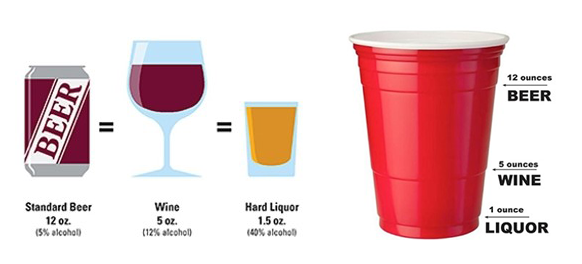
Not all drinks contain the same amount of alcohol, so the amount of liquid in your glass, can, or bottle does not necessarily match up to how much alcohol is actually in your drink. One unit of alcohol, or standard drink, is equal to 12oz of beer, 5oz of wine and 1.5 oz of hard liquor. Many alcoholic drinks are commonly served with more than one standard drink. Be sure to read the label to determine how many drinks you are consuming!
BLOOD ALCOHOL CONTENT
Blood Alcohol Content (BAC) is the percentage of alcohol in a person’s bloodstream due to consuming alcohol. It ranges from 0% (no alcohol) to 0.4% (potentially fatal). BAC depends on how many drinks were consumed, how quickly they were consumed, how much food was ingested prior to drinking, age, and weight. Because alcohol is a toxin to your body, if you are drinking faster than your liver can process the alcohol, intoxication occurs.
The effects of drunkenness include:
- Slurred and disorganized speech
- Poor coordination
- Disruptions in mood, behavior, and cognitive functioning
- Nausea and vomiting
- Mental amnesia
- Unresponsiveness and loss of consciousness
The impacts of intoxication increase with alcohol consumption and higher blood alcohol levels.
ALCOHOL POISONING
It is important to remember that alcohol consumption can be dangerous. Knowing the signs and symptoms of alcohol poisoning and what to do if you encounter someone who needs help can make a huge difference.
The common signs of alcohol poisoning are: unconsciousness, confusion, vomiting, seizures, slow breathing, irregular breathing, blue/pale/ashen skin and cold or clammy skin.
If you encounter someone who is suffering from any of the above conditions, it is important to help them seek medical treatment.
DO: Call 911
DON'T: Leave them alone
DO: Stay with them until medical help arrives
DON'T: Give them food, drink or medication
DO: Make sure they can breathe and are in a safe location
DON'T: Put them in a cold shower/tub
SOBERING UP
Our bodies can only metabolize, or get rid of, approximately one standard drink of alcohol per hour. Contrary to popular belief, caffeine, exercise, taking a shower or drinking water won’t help you sober up! There is no way of speeding up this process; TIME is the only solution!
CANNABIS
Cannabis is the ingestion of the chemical THC produced in the cannabis plant by smoking, vaping, eating, or dabbing. Cannabis produces an altered sense, mood changes, impaired body movements, difficulty thinking, impaired memory, hallucinations, delusions, and psychosis. Long term effects of cannabis can include lower life satisfaction, poor mental and physical health, less restful sleep, bronchitis, asthma, elevated relationship problems, and weakened academic and career success.
Cannabis affects every individual differently. The same person may have different experiences on separate occasions or across their lifespan. This can be influenced by the strength of the drug, the amount taken, and the health of the individual.
In larger amounts and concentrations, the following can occur:
- Memory impairment
- Slower reflexes
- Bloodshot eyes
- Increased heart rate
- Anxiety and paranoia
To reduce the risks associated with using cannabis:
- Purchase from a medical dispensary
- Know the CBD to THC ratio
- Vaporizers, edibles, and oils reduce the inhalation of carcinogens caused by smoking
- Avoid operating machinery after ingestion
- Waiting 3-5 hours is recommended
- Avoid synthetic products such as K2 or Spice
SIU POLICY ON CANNABIS
Marijuana is prohibited on SIU's campus. Although the state of Illinois passed a law allowing for the use of recreational marijuana, it remains illegal under federal laws. Since SIU receives federal funding, it must abide by federal laws. Anyone found with marijuana or under the influence of marijuana in any form on campus may face university, city, state and/or federal consequences. Be informed; know the laws and your Student Code of Conduct!
If you are concerned about your marijuana use and would like to talk to a professional, contact Counseling and Psychological Services at 618-453-5371 to make an appointment.
ILLICIT DRUG MISUSE
Illicit drugs are substances that are manufactured, obtained, or sold illegally. This can include illegal drugs such as heroin, cocaine, and methamphetamine, as well as the misuse of prescription drugs. Illicit drugs are highly addictive and can have serious and sometimes fatal consequences. Short and long-term health effects include cardiovascular disease, stroke, mental and cognitive disorders, organ dysfunction, and seizures. Methods of illicit drug use, particularly injection drug use, increase the risk of infections like HIV and hepatitis.
Common signs of illicit drug misuse include:
- Sudden changes in mood or behavior
- Confusion, paranoia, or hallucinations
- Slurred speech or impaired coordination
- Rapid or irregular heartbeat
- Excessive sweating or chills
- Nausea or vomiting
- Loss of consciousness or seizures
If someone is showing these signs, especially if they are unresponsive or having trouble breathing, seek medical help immediately and administer Narcan (Naloxone) if able.
NARCAN (Naloxone)
Narcan (Naloxone) is a safe, easy-to-use medication that can reverse the effects of opioid overdose within 2–3 minutes. Narcan does not work for overdoses involving non-opioid drugs like cocaine, methamphetamine, or alcohol—but it won’t hurt if given.
Common signs of opioid overdose include:
- Unresponsiveness or unconsciousness
- Slow, shallow, or no breathing
- Blue or grayish lips and fingernails
- Gurgling or choking sounds
- Limp body
- Pale or clammy skin
- Very small (pinpoint) pupils
Narcan is available for free in the Student Health Services Vending Machine located in the Student Rec Center and the Student Health Center Pharmacy behind the counter.
Always call for emergency help, even after using Narcan, as the person may need more care.
Please fill out the request workshop online form to request programming.
Resources:
- Alcohol and Drug Foundation
- Standard Drink Calculator
- Blood Alcohol Content Calculator
- National Institute on Drug Abuse
Printable Flyers:
- Alcohol Measurement
- Alcohol Poisoning
- Reduce your Risks 1
- Reduce your Risks 2
- Sobering Up
- Standard Drink
- Standard Drink Size 2
- Academics and Cannabis
Printable Flyers:
Cannabis:
Vaping:
Prescription Drugs:
Stress Management
Stress is a natural part of life, and not all of it is bad. It is the reaction of the body and mind to meet everyday challenges and demands. Stress results in racing thoughts, decreased concentration, and feeling overwhelmed. It can increase worry, sadness, and irritability. Physically, stress can increase your pulse and breath, cause headaches, stomach aches, and muscle tension, disrupt sleep, and weaken the immune system. Long-term stress can result in health problems, such as obesity, high blood pressure, heart disease, and stroke. Managing stress can improve sleep, mood, and relationships.
Stress can be difficult to avoid. You can work to prevent stress by:
- Consistently taking care of your body by getting quality sleep, engaging in physical activity, eating right, and taking your medication
- Avoiding substance use
- Routinely engaging in enjoyable and relaxing activities
- Connecting with people who keep you calm and provide emotional support
- Setting limits and refusing extra requests for your time
- Maintaining routines
- Planning ahead
- Being organized
- Prioritizing tasks
- Breaking down overwhelming tasks into manageable ones
- Managing time effectively
- Avoiding procrastination
- Maximizing study strategies
- Balancing electronic usage
- Taking breaks when needed
- Accepting that you cannot control everything
- Letting go of worry about situations you can’t change
Stress Management is utilizing techniques to help you relax and manage stress levels to improve everyday functioning. It begins with noticing when you feel stressed. You can then choose to either change the situation or change your reaction to it.
Strategies to manage stress include:
- Enjoyable distractions
- Soothing activities
- Exercise
- Music
- Art
- Aromatherapy
- Massage
- Healthy snacks
- Deep Breathing
- Progressive Muscle Relaxation
- Guided Imagery
- Mindfulness
- Yoga
- Tai Chi
- Meditation
- Biofeedback
To learn more, please visit Wellness and Health Promotion Service's stress management locations.
For further assistance managing stress, please contact Counseling and Psychological Services (CAPS) at (618) 453-5371.
Please fill out the request workshop online form to request programming.
Resources:
Printable Flyers:
Resilience and Coping Strategies
Resilience is a key component to your success as a student at Southern Illinois University, Carbondale. Life experiences include obstacles, disappointments, and loss. It is important to learn to cope with distress in order to persevere and come through stronger, more capable, and wiser.
COPING STRATEGIES
Coping is using strategies to deal with your emotions and overcome difficulties to maintain mental and emotional well-being. These strategies enable individuals to tolerate stress, minimize reactions, and master difficult situations.
Coping skills involve:
- Emotional expression- recognizing, truly feeling, understanding, and sharing the emotions one feels.
- Positive thinking- the practice of focusing on the good in any situation and expecting positive outcomes.
- Relaxation- utilizing mindfulness, deep breathing, and enjoying activities to manage distress.
- Social support- comfort and assistance provided by friends, family, partners, pets, acquaintances, and mental health providers.
- Problem-solving- addressing a problem as a way of modifying or eliminating it.
- Emotional regulation- the ability to respond to demanding experiences and negative emotions with control over one’s mental state and behavior.
- Maintaining boundaries- setting expectations with others according to what feels comfortable and respectful to you to foster healthy relationships.
- Cognitive reappraisal- changing one’s thinking from emotional and personal to objective to reduce distress.
- Finding meaning- drawing on one’s personal beliefs, values, and existential goals to find purpose in life and benefits in misfortune.
Effective coping strategies are different for each person. Additionally, strategies that work under specific circumstances or situations may not be as effective in others. It is important to practice a variety of strategies to get the most benefit from the technique and be able to adapt the strategy to fit the need.
Some examples of coping strategies include:
- Exercise
- Yoga
- Writing
- Art
- Garden
- Read
- Listen to music
- Bake
- Clean/Organize
- Dance
- Stretch
- Deep breathing
- Take a nap
- Knit or sew
- Play a game
- Pamper yourself
- Meditate
- Connect with nature
- Watch a favorite show or movie
- Play a mind challenge
- Sing or play a musical instrument
- Do a DIY or craft project
- Punch a pillow
- Pet an animal
- Go shopping
- Plan a get-together or event
- Take a shower or bath
- Go for a drive
- Hug someone or a pillow
- Aromatherapy
- Connect with others
- Perform a random act of kindness
- Volunteer
- Pray
- Make a list of what you are grateful for
RESILIENCY
Resiliency is the ability to adapt, cope, and bounce back from hardship. It involves flexibility, optimism, confidence, tolerating distress while maintaining emotional well-being, and learning from one’s experiences. Resiliency improves life satisfaction and success. Some people are naturally more resilient. However, everyone can work to enhance their level of resilience.
To develop resilience, try practicing the following:
- Be present in the moment, taking note of your surroundings and experiences without judgement.
- Have confidence in yourself, your beliefs, and what you can accomplish.
- Invest in your physical health.
- Engage in self-care and coping.
- Strive for optimism and limit hostility.
- Allow yourself to experience positive and negative emotions.
- Focus on what you can control, including your emotions and reactions.
- Take action to improve or resolve conflicts.
- Practice flexibility.
- Reframe mistakes as learning opportunities.
- Remain hopeful for positive outcomes.
- Develop compassion for yourself and others and practice gratitude.
- Connect with others and accept assistance.
- Build strong, healthy relationships.
- Contribute to the needs of others.
- Expand your sense of purpose and meaning in life.
If you need additional help building emotional resilience, please contact Counseling and Psychological Services (CAPS) at 618-453-5371.
MENTAL HEALTH EARLY ACTION ON CAMPUS ACT
To address gaps in mental health services on college campuses across Illinois, the Mental Health Early Action on Campus Act seeks to further identify students with mental health needs and connect them to services, increase access to support services and clinical mental health services on college campuses and in surrounding communities, and empower students through peer-to-peer support and training on mental health needs and resources, and reduce administrative policies that burden students seeking leave for mental health conditions.
To raise mental health awareness at Southern Illinois University, Carbondale, Wellness and Health Promotion Services coordinates and offers the following:
- Annual student orientation on mental health conditions
- Mental Health resources, stigma reducing, and support-seeking behavior messaging
- The online Saluki Screening tool
- The Peer HEROES program
- Mental Health First Aid training
Please fill out the request workshop online form to request programming.
Resources:
Printable Flyers:
Violence Prevention
Violence prevention is the reduction in physical force or power against individuals that may result in injury, neglect, and/or psychological harm. Violence can negatively impact mental, emotional, physical, and social well-being, which can result in injuries, infectious diseases, reproductive health problems, and mental health conditions. Studies have shown that proactive, preventative approaches reduce violence and improve health and safety.
Our approach to violence prevention includes:
- Providing information and education on campus and online safety, healthy relationships, consent, conflict resolution, and bystander intervention.
- Providing free, customized training to groups of campus stakeholders on topics related to identifying interpersonal violence, how to respond to students who disclose victimization, Mental Health First Aid, and Bystander Intervention.
- Engaging in awareness events and programming for Stalking, Dating Violence, Sexual Assault, and Domestic Violence Awareness Months
- Collaborating with departments on campus and community partners through initiatives like the Sexual Assault Response Committee.
- Conducting and reporting results of the annual Be Heard: Sexual Misconduct Campus Climate Survey -link to most recent results-
INTERPERSONAL VIOLENCE:
Interpersonal violence is physical, sexual, or emotional violence that can occur between family, friends, intimate partners, acquaintances, or strangers. It can include bullying, harassment, hazing, stalking, dating and domestic assault, sexual assault, and child or elder maltreatment.
Students who have experienced such violence while enrolled at Southern Illinois University, Carbondale have the right to support from the University to help them continue their education. To report a crime or incident violence, click here. For more information about your options and places to find support, please click here.
BYSTANDER INTERVENTION:
Bystander Intervention is recognizing a potentially harmful situation and choosing to respond in a way that could positively influence the outcome. One should not put themselves in harms way, but can assume personal responsibility to seek help. Bystander Intervention training comprises tips to intervene early and discourage violence.
Please fill out the request workshop online form to request programming.
Resources:
Printable Flyers:
Health Equity
Health Equity means fair and just opportunity for all individuals to attain optimal health, regardless of race, ethnicity, ability, sexual orientation, gender identity, socioeconomic status, experiences, or background. It advances positive health outcomes by increasing access to quality health care and eliminating disparities for disadvantaged and underserved populations.
To aid in these efforts, we strive to:
- Establish policies and programs that support health for all Southern Illinois University, Carbondale students.
- Promote Student Health Services supports, services, and programs inclusive of race, ethnic minority groups, women, people with disabilities, LGBTQ+ populations, international students, and other groups.
- Collaborate with campus and community stakeholders to increase awareness of and advocation for social justice.
Learn more about SIUC’s Student Health Center Healthcare Equality Index (HEI) High Performer designation.
To learn more about the Higher Education Resources and Opportunities for Salukis in Need (HEROES) program services to increase access to healthcare for those experiencing financial needs, visit the HEROES website.
Please fill out the request workshop online form to request programming.
Resources:
- World Health Organization - Health Equity
- Rainbow Community Health and Wellness
- The Little Resource Center Carbondale
- Jackson County Health Department
- Mental Health America
- National Coalition for LGBTQ Health
- Migration Data Portal
- Equip for Equality
Printable Flyers: